

California Institute of Technology
United States
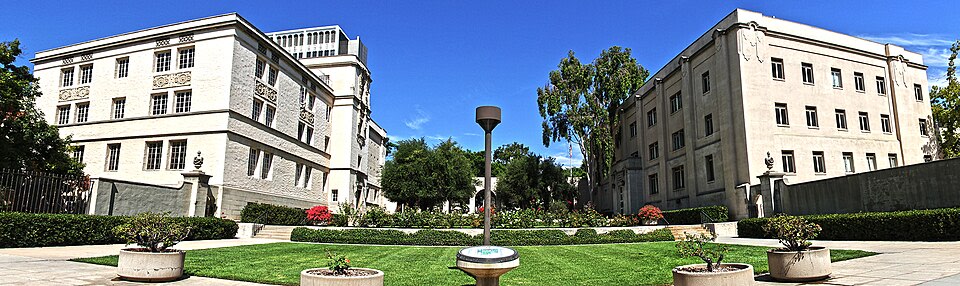
The California Institute of Technology, better known as Caltech, is a private research university located in Pasadena, California, in the United States, about 11 miles northeast of downtown Los Angeles. It began in 1891 as a preparatory and vocational school founded by Amos G. Throop and took its present name in 1920. It belongs to a small group of US institutes of technology devoted to pure and applied sciences and has six academic divisions.
QS World University Rankings 2027 and Times Higher Education's World University Rankings 2027 both rank Caltech No. 7; THE also had it at No. 7 in 2026. ShanghaiRanking's ARWU 2026 places it No. 10, after No. 9 in 2025.
Caltech manages and operates NASA's Jet Propulsion Laboratory, whose predecessors were set up under Theodore von Kármán in the years 1936 to 1943. As of October 2024, 80 Nobel laureates had been affiliated with Caltech, which Wikipedia says is the highest number per capita of any institution in America; chemist Linus Pauling, the only person to win two unshared Nobel Prizes, is among them. First-year students must live on campus, and an honor code allows faculty to set take-home exams.
Sources of this text: Wikipedia · Quacquarelli Symonds (QS) · Times Higher Education · ShanghaiRanking Consultancy
Place =2
In 3 of 5 rankings, together with 4 others named by the same number of rankings. The more trusted rankings name an entry, the higher its place; inside a shared place, votes decide the order.
0 votes · 0 voters
1 vote puts California Institute of Technology first in its shared place
Named by
On Instagram
A post shared by @caltechedu on Instagram
Next to California Institute of Technology
- 1. Harvard UniversityIn 5 of 5 rankings
- 1. Massachusetts Institute of TechnologyIn 5 of 5 rankings
- 1. Stanford UniversityIn 5 of 5 rankings
- 1. University of CambridgeIn 5 of 5 rankings
- 1. University of OxfordIn 5 of 5 rankings
- 2. Columbia UniversityIn 3 of 5 rankings
- 2. Princeton UniversityIn 3 of 5 rankings
- 2. University of California, BerkeleyIn 3 of 5 rankings
- 2. Yale UniversityIn 3 of 5 rankings
All of the best universities in the world · How the places work