

Iceland
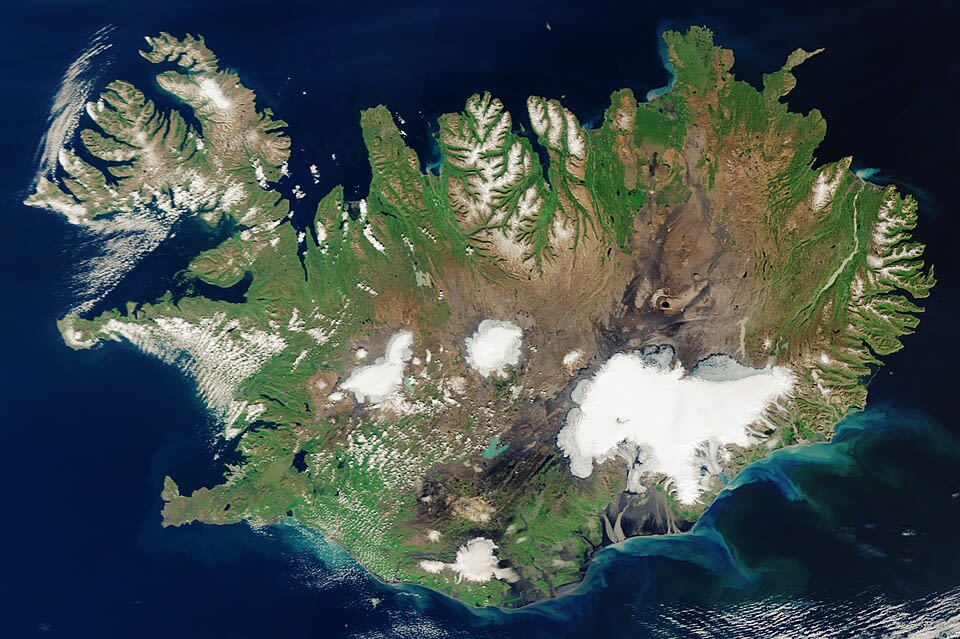
Iceland is an island nation of the Nordic region, set between the Arctic Ocean and the North Atlantic on the Mid-Atlantic Ridge. It is Europe's westernmost and most sparsely populated country, with roughly 395,000 residents, about 35% of whom live in the capital, Reykjavík. Icelandic is the official language.
The 2026 edition of the World Happiness Report, published by the Wellbeing Research Centre at Oxford with Gallup and the UN SDSN, ranks Iceland No. 2, with a life evaluation score of 7.540, averaged over 2023–2025. In the previous edition it was No. 3 with 7.515. The report measures how people rate their lives and links the results to factors such as social support and healthy life expectancy.
Iceland sits on a rift between tectonic plates, so it has geysers and frequent volcanic eruptions, and its interior is a volcanic plateau with lava fields, mountains and glaciers. The Gulf Stream gives it a temperate climate, although it lies just south of the Arctic Circle. According to the Landnámabók, an old manuscript,, settlement began in 874 AD with the Norwegian chieftain Ingólfr Arnarson.
Sources of this text: Wikipedia · Wellbeing Research Centre Oxford / Gallup / UN SDSN
Place =2
In 1 of 2 rankings, together with 17 others named by the same number of rankings. The more trusted rankings name an entry, the higher its place; inside a shared place, votes decide the order.
0 votes · 0 voters
1 vote ($1.99) to pass Finland
Named by
Next to Iceland
All of the happiest countries in the world · How the places work